Victorian era to present day

Victorian potteries and the tiles they produced reshaped British interiors and public buildings. The first and most famous producer being Thomas Minton, who patented medieval-style inlaid tiles collaborating with Pugin to supply churches and public buildings. Thomas’s son, Herbert Minton would later take over from his father partnering with Michael Hollins in 1845.
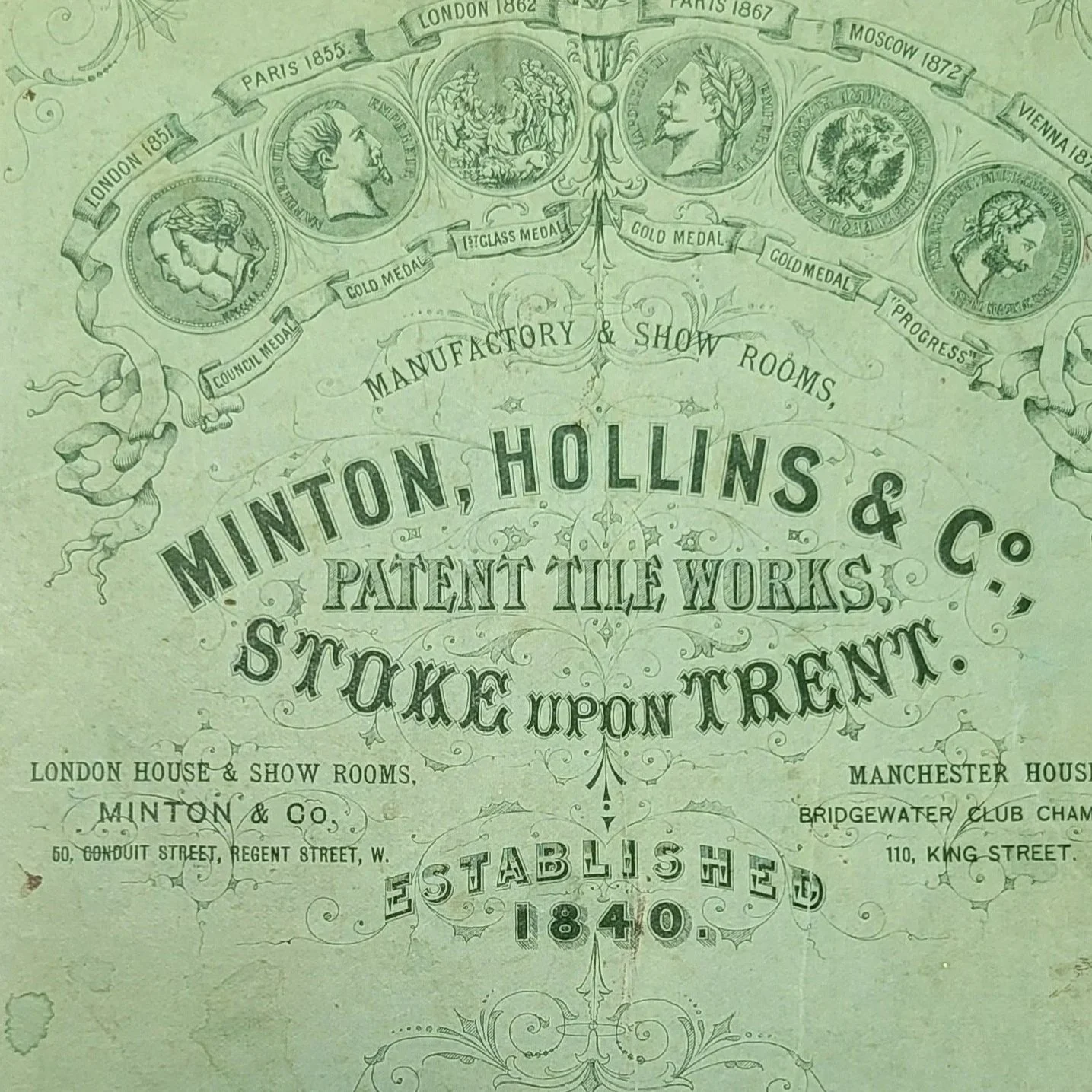
Vintage certificate or advertisement for Minton, Hollins & Co., Patent Tile Works, Stoke upon Trent. It mentions their history of awards and medals, including medals from Paris, London, Lyon, Moscow, Vienna, and other cities, with specific years. The company was established in 1840, located at 50 Conway Street, Regent Street, W., and their Manchester house at Bridgewater Club, with the London house at 110 King Street.
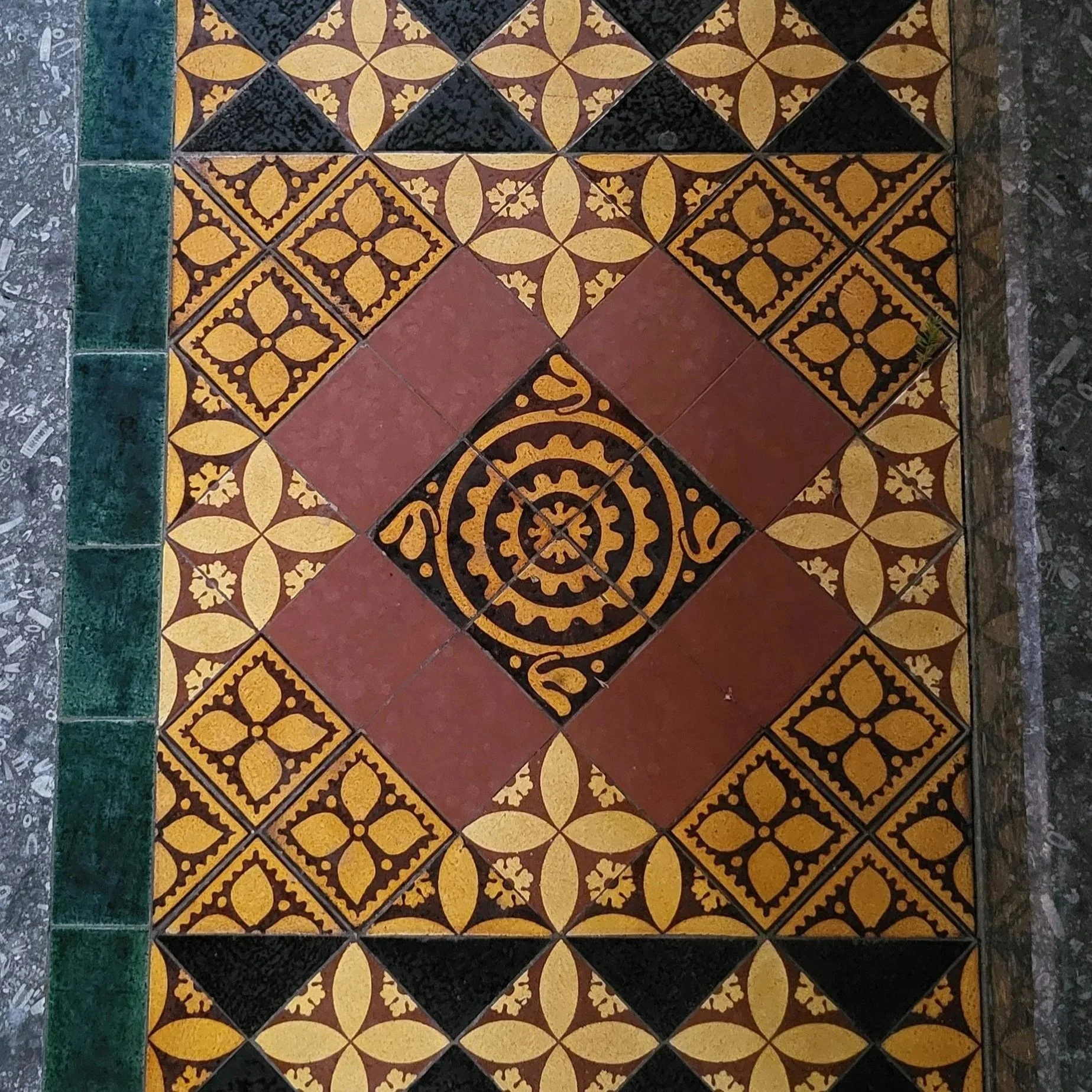
Decorative encaustic tiles with intricate floral and geometric patterns bordered with a glazed green tile, laid in a Surrey church
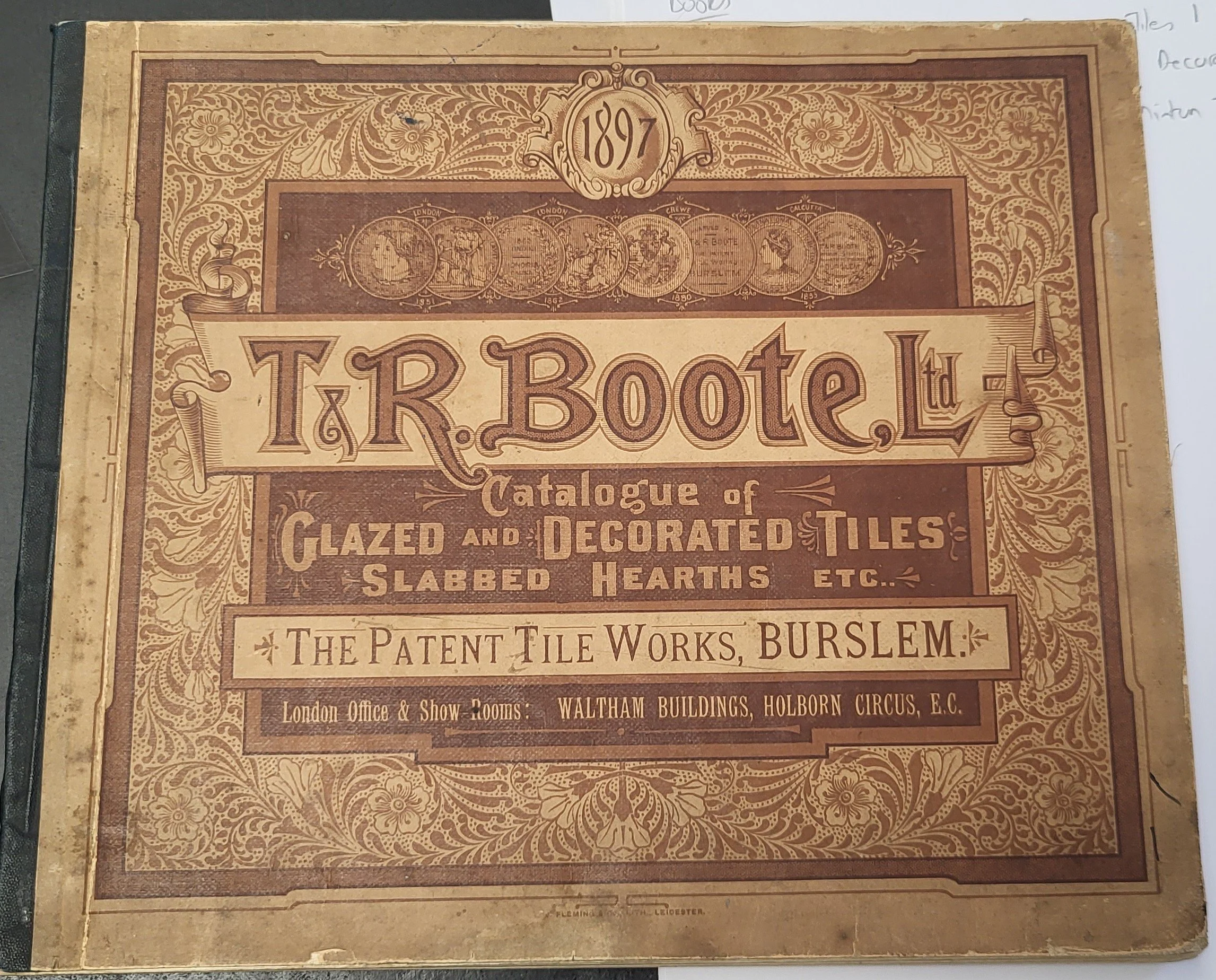
A vintage catalogue cover from 1897 TR Boote, Burslem, Staffordshire. As well as providing decorative tiles for fireplaces etc, they also supplied the tiles that line the Blackwall Tunnel
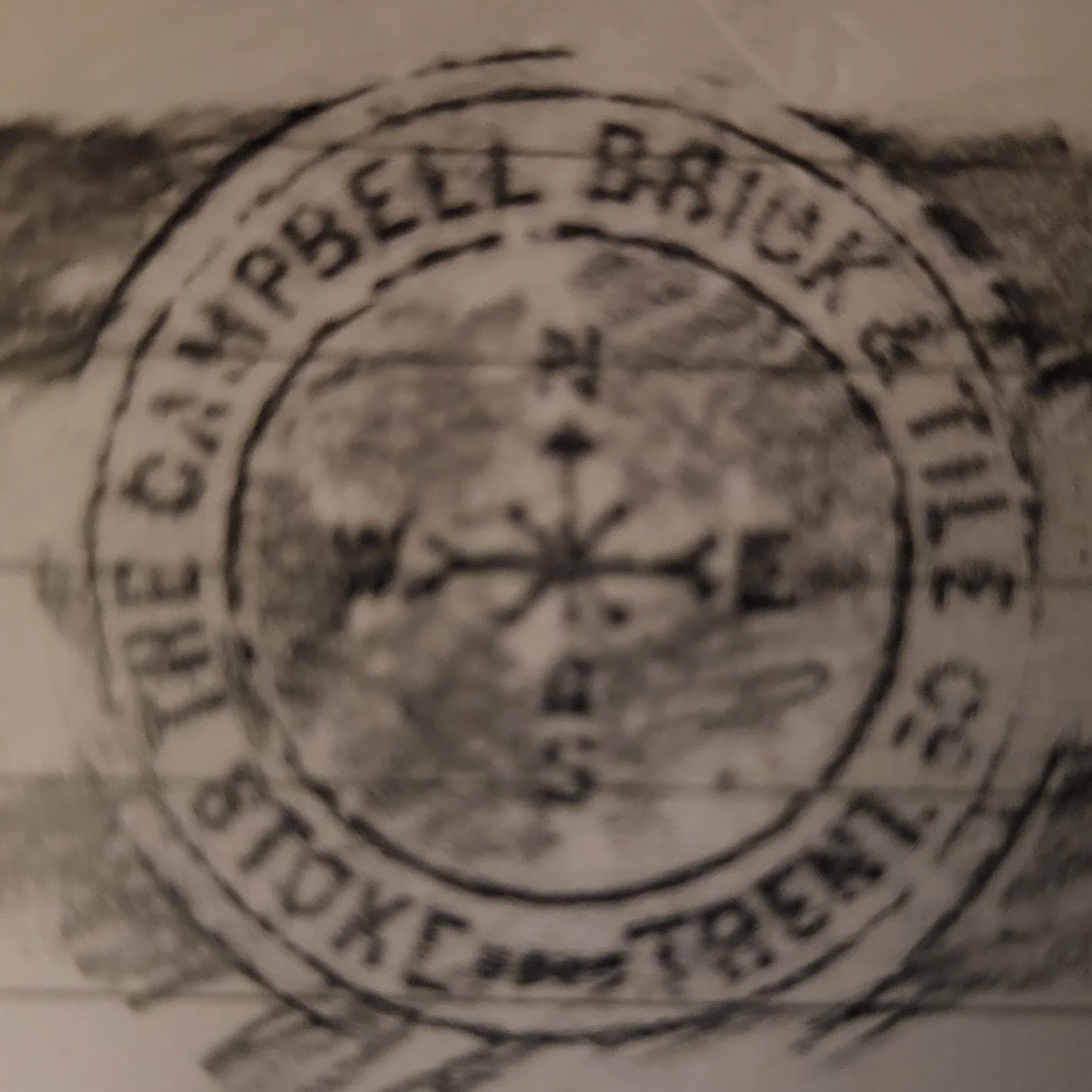
Pencil rubbing of the markings on the back of a tile manufactured by Campbell Brick Company in the Victorian era
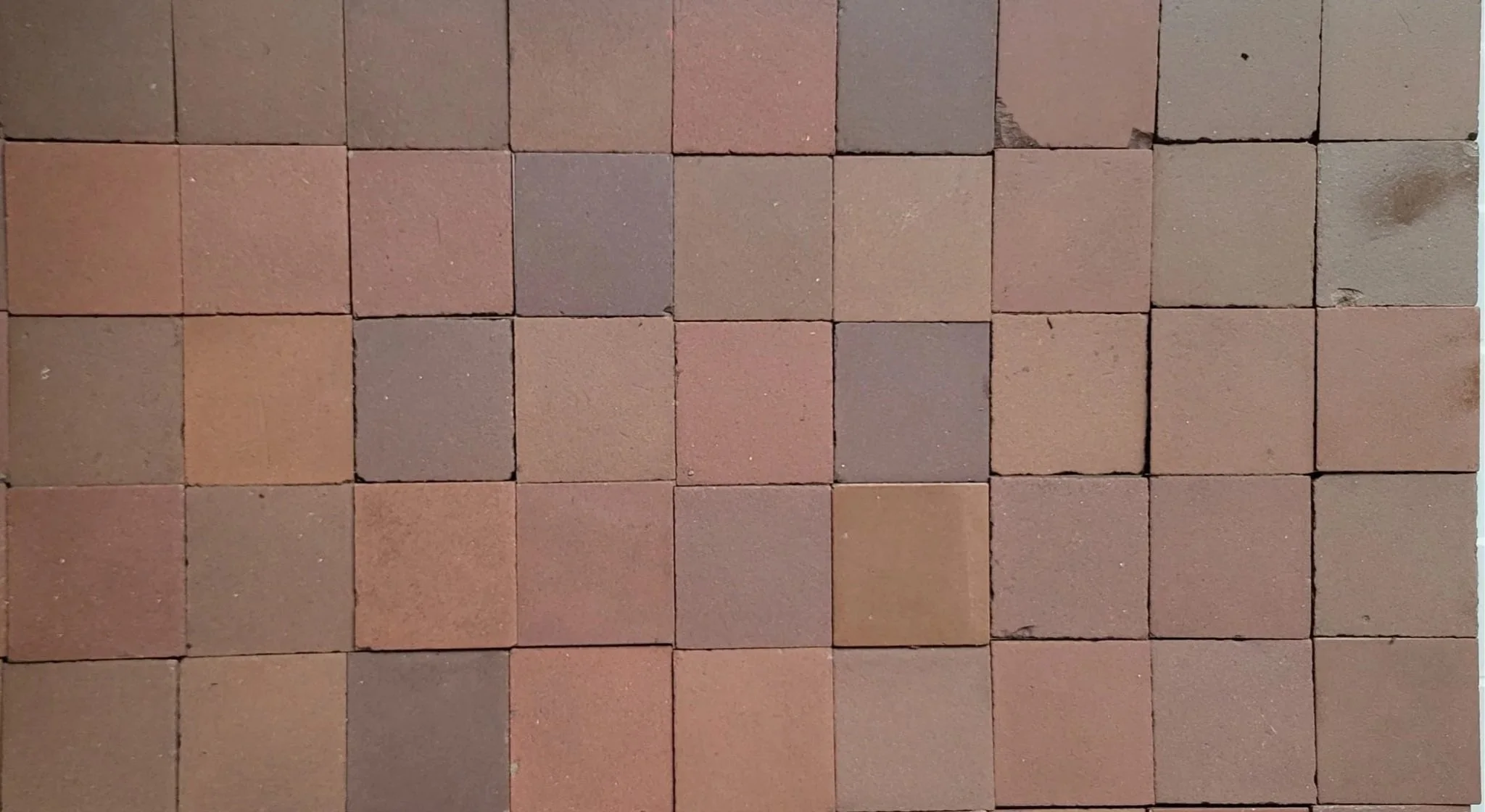
Close-up view of the myriad of shades of brown all found within one tiled floor.
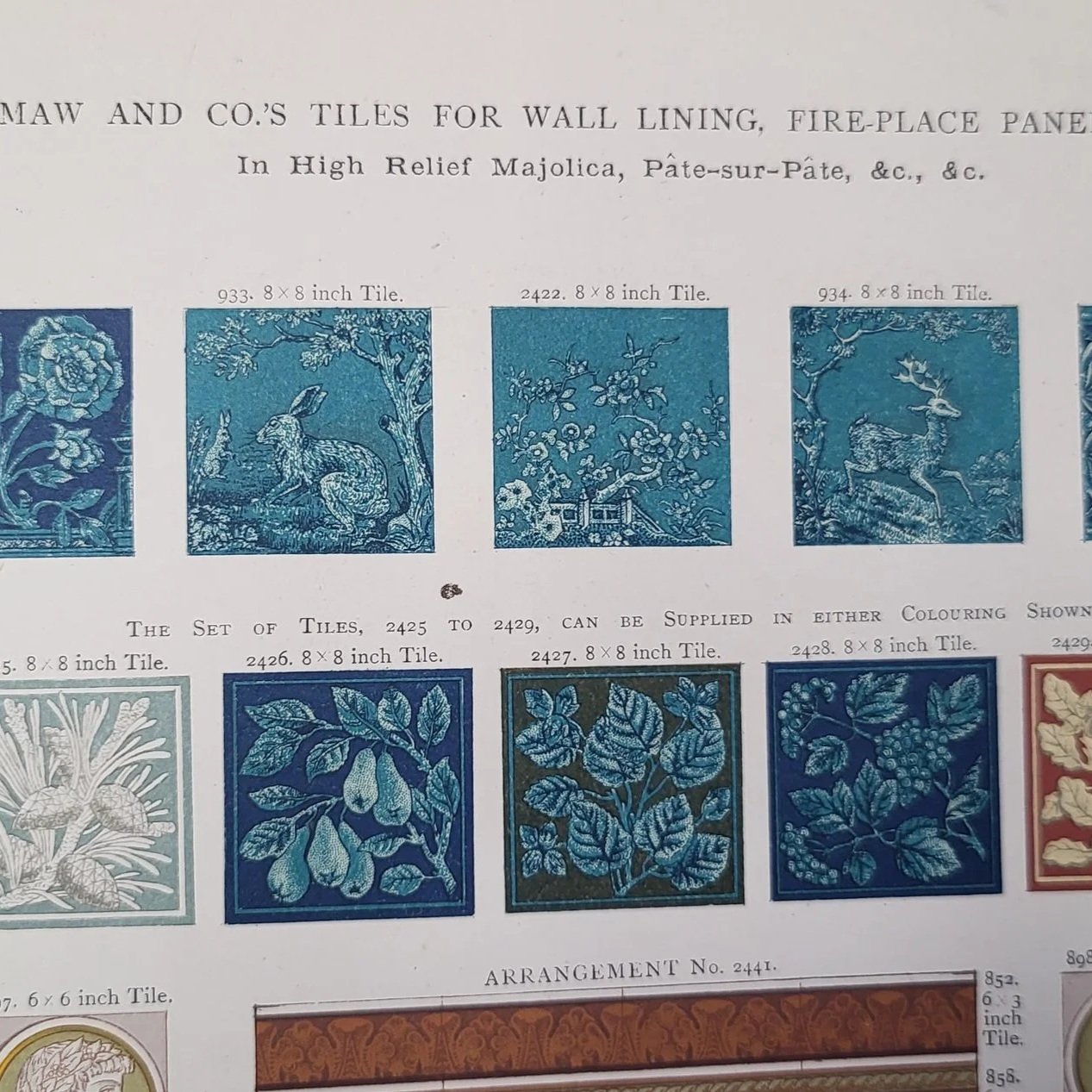
A page from a catalogue showcasing various blue decorative tiles with floral, animal, and nature motifs
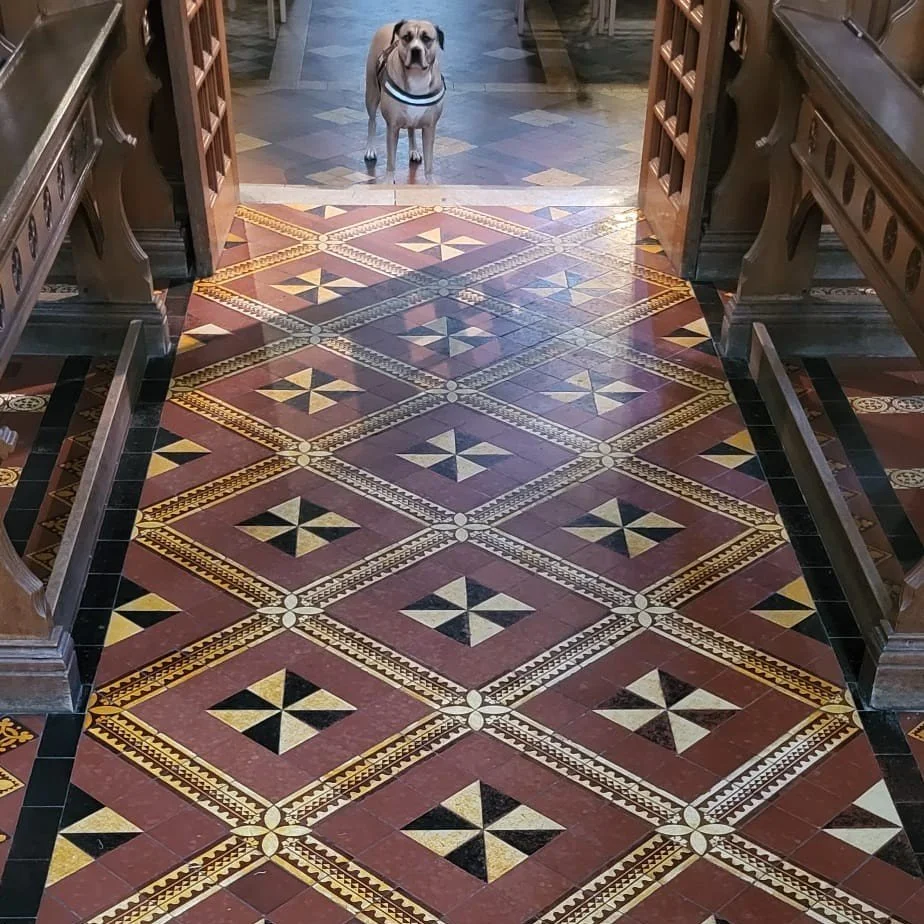
Riley,  on a long walk via a Surrey church with ornate patterned tile floors
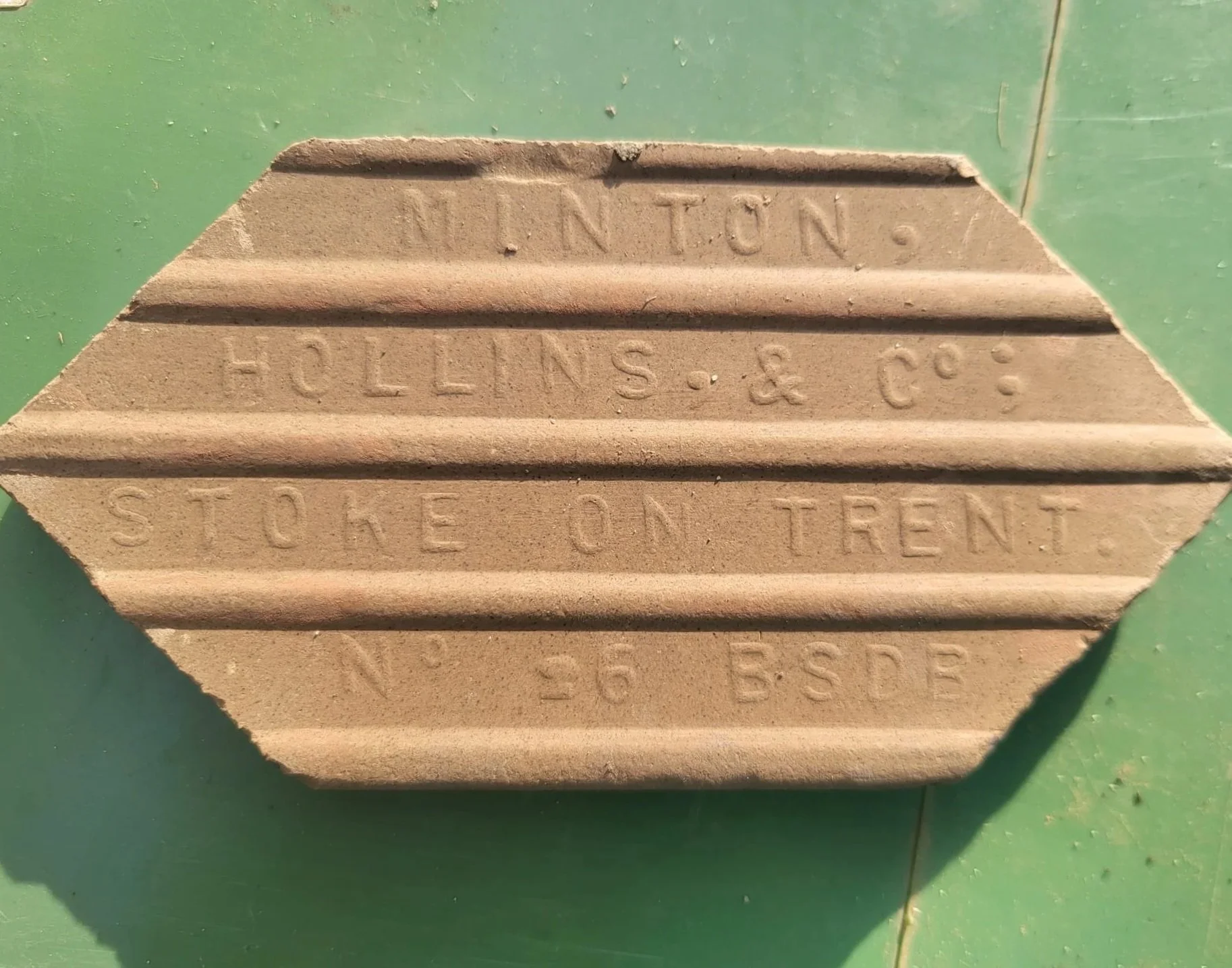
Close-up of the back of a tile manufactured by Minton Hollins in the Victorian era

Later, firms including Maw & Co and Craven Dunnill of Jackfield would perfect mass production techniques supplying even modest homes with geometric tiles, which were considered practical and hygienic. They also turned out to be long lasting and its doubtful any modern tile installation will endure so well.
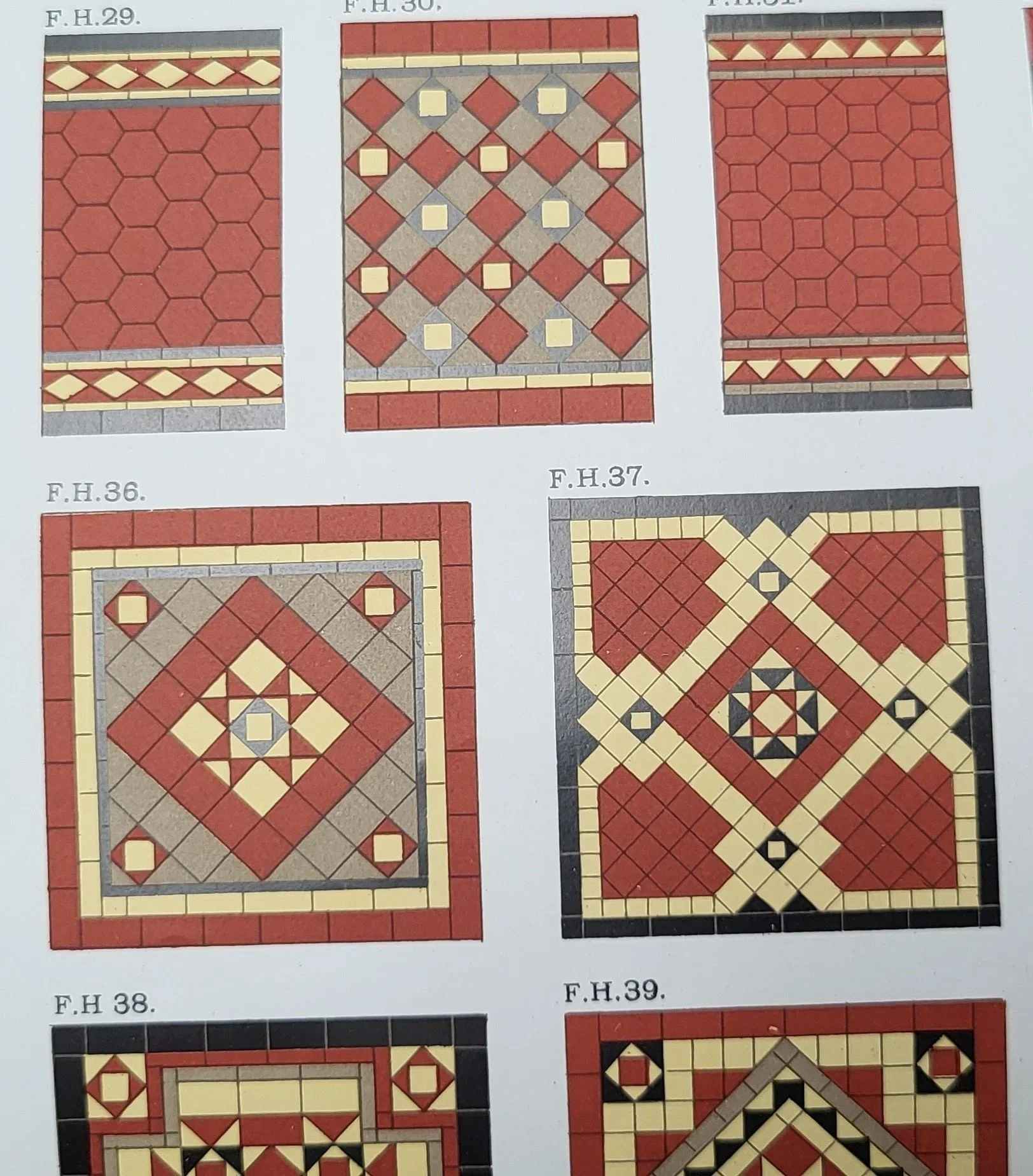

Three different patterns of tiled floor designs. The top row shows three patterns: the first with large red hexagons, the second with a diamond pattern with red, grey, and cream-colored tiles, and the third with a similar honeycomb pattern but with a border of triangular shapes at the top. The bottom row shows three additional patterns with similar color schemes but different geometric arrangements.
Close-up of packaging for Craven.Dunnill tiles, featuring the brand name and logo.
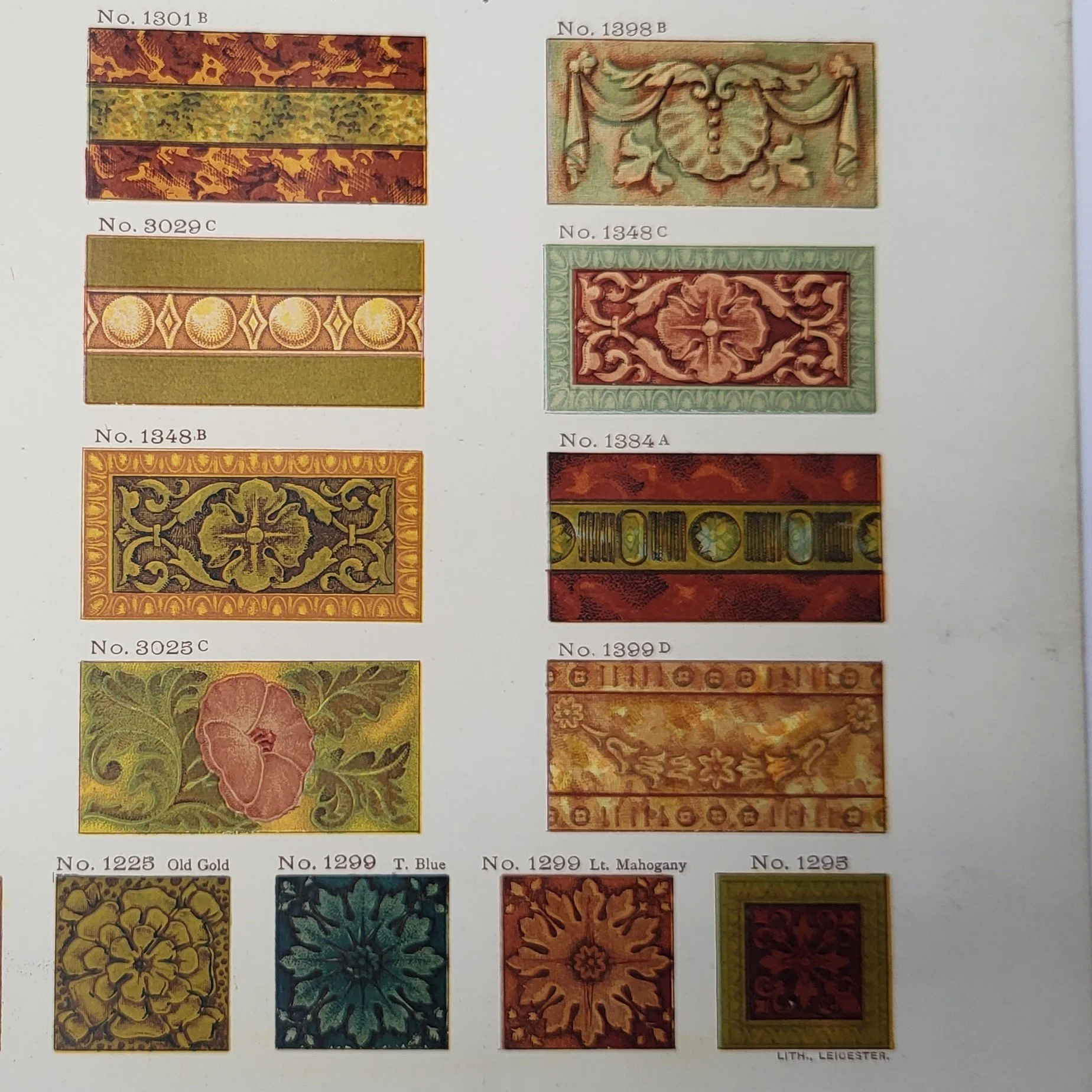
Collection of decorative art tiles with various patterns and vintage design elements, labeled with catalog numbers and different color themes.

The main colours were earthy tones of buff, coffee, brown and black, plus white, green, blue and more rarely, pink, orange and purple. Shades varied between manufacturers and over the decades as supplies of clay and the production methods varied. Within a single hallway, tiles can often be found of differing shades, thicknesses and even from different potteries. And with the passage of over 100 years, those little discrepancies — subtle shifts in tone, the way one colour tile ages faster and the softening of a fired edge — accumulate into a rich, lived patina that modern production methods just cannot replicate.
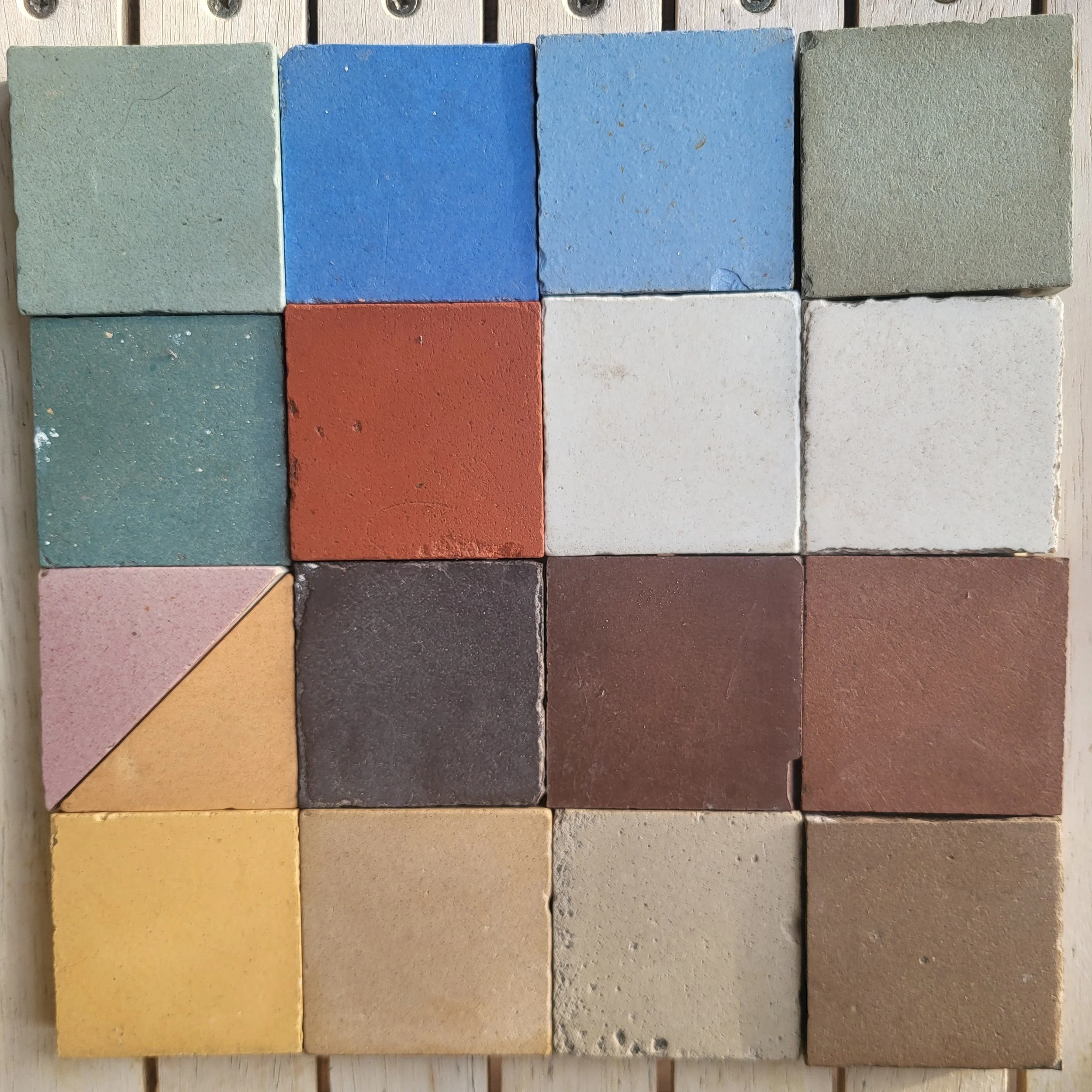
A collection of 12 concrete bricks arranged in four rows and three columns, with various colors including green, blue, red, yellow, black, and gray, on a wooden surface.
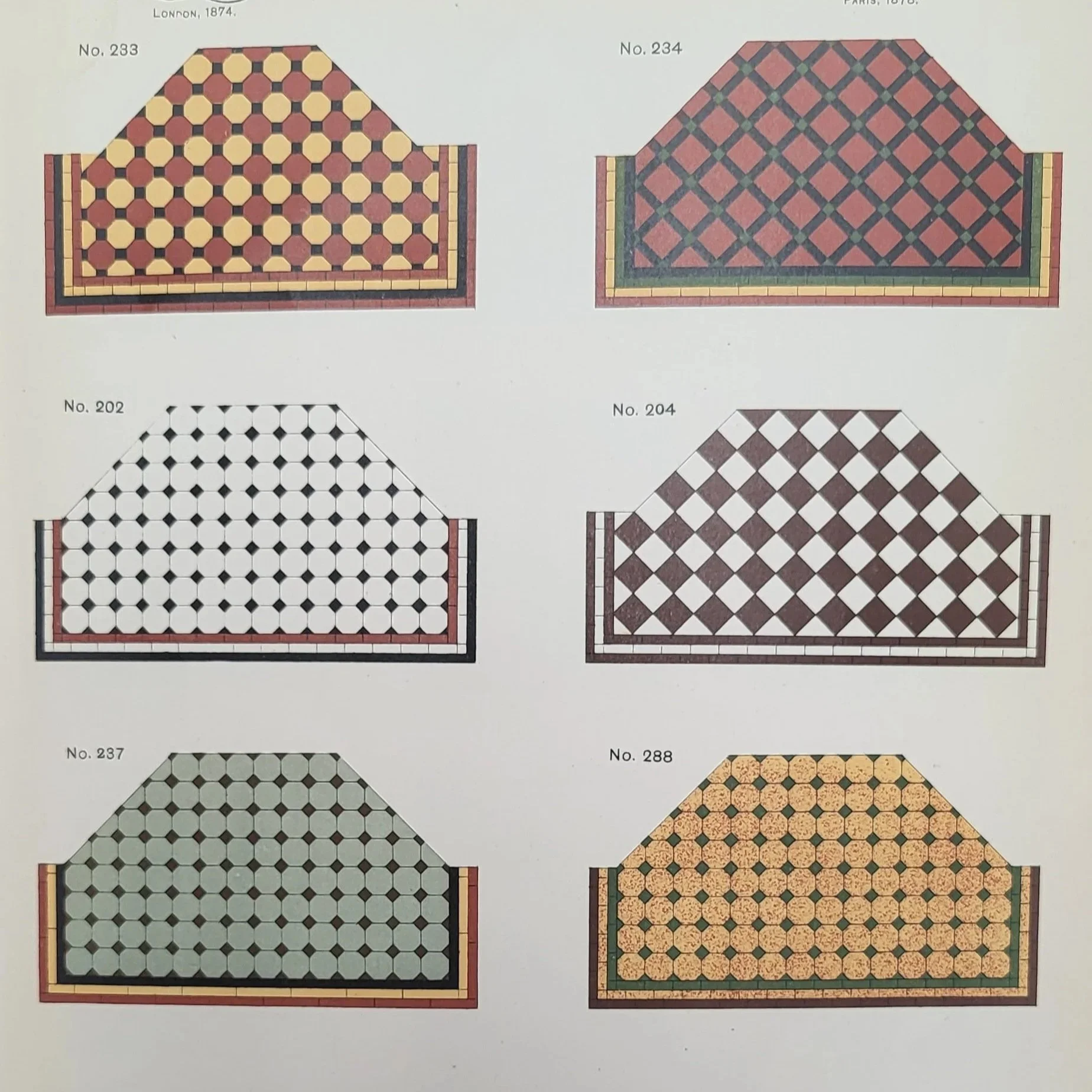
A page displaying various vintage tile patterns numbered 202, 204, 237, and 288, with some patterns in color and others in black and white, from an older publication.
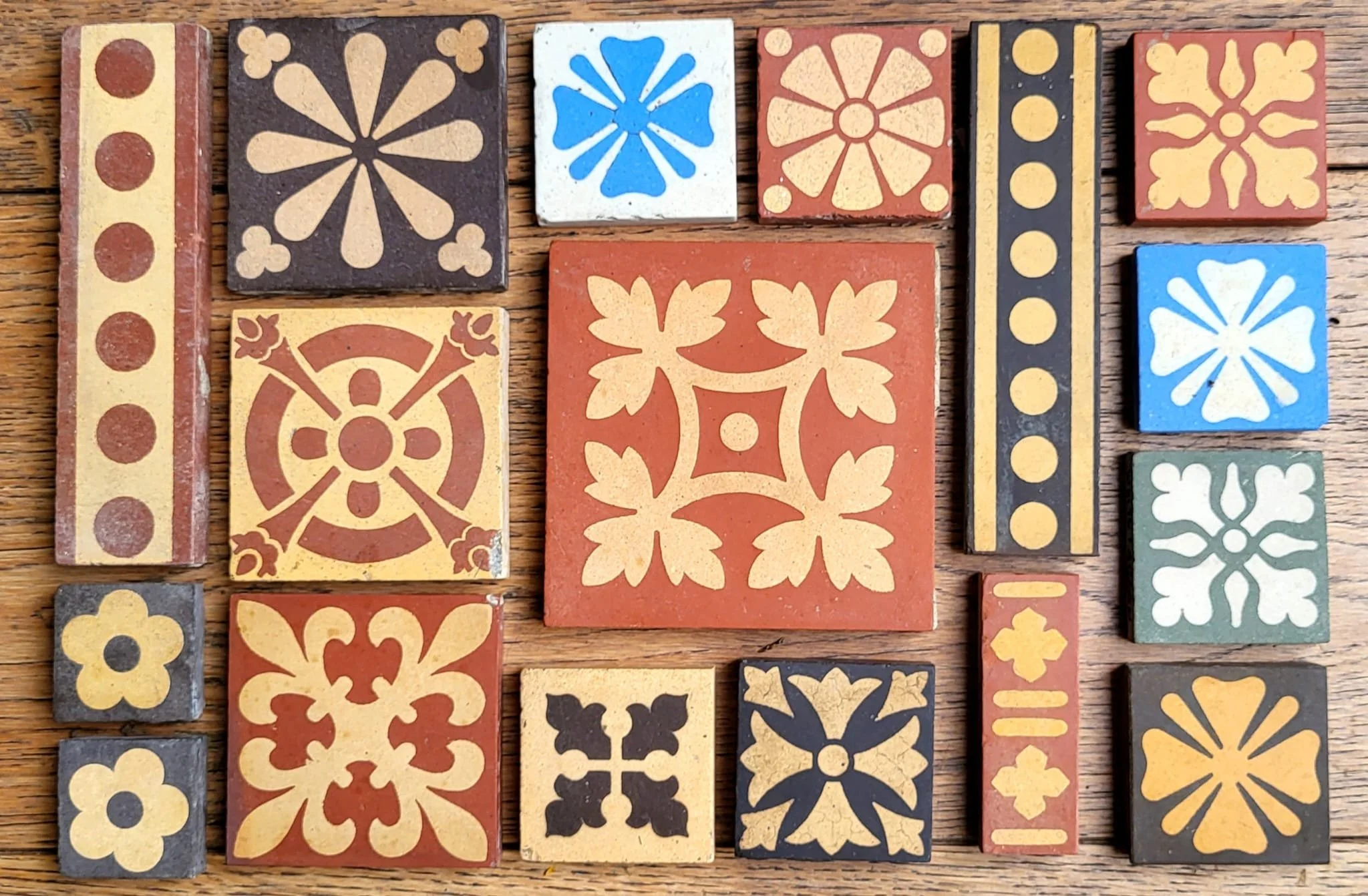
Colorful vintage ceramic tiles with floral and geometric patterns in shades of yellow, black, white, red, and blue, arranged on a wooden surface.

Unfortunately by the 1950s, the desire for these beautiful tiled floors had somewhat faded and the intricate patterns were seen as fussy or dated. Often, they were hidden under carpets or linoleum, or even worse discarded entirely. it wasn’t until the Victorian Revival of the 1980s that people began uncovering and restoring these features and nowadays they are once again treasured and valued.
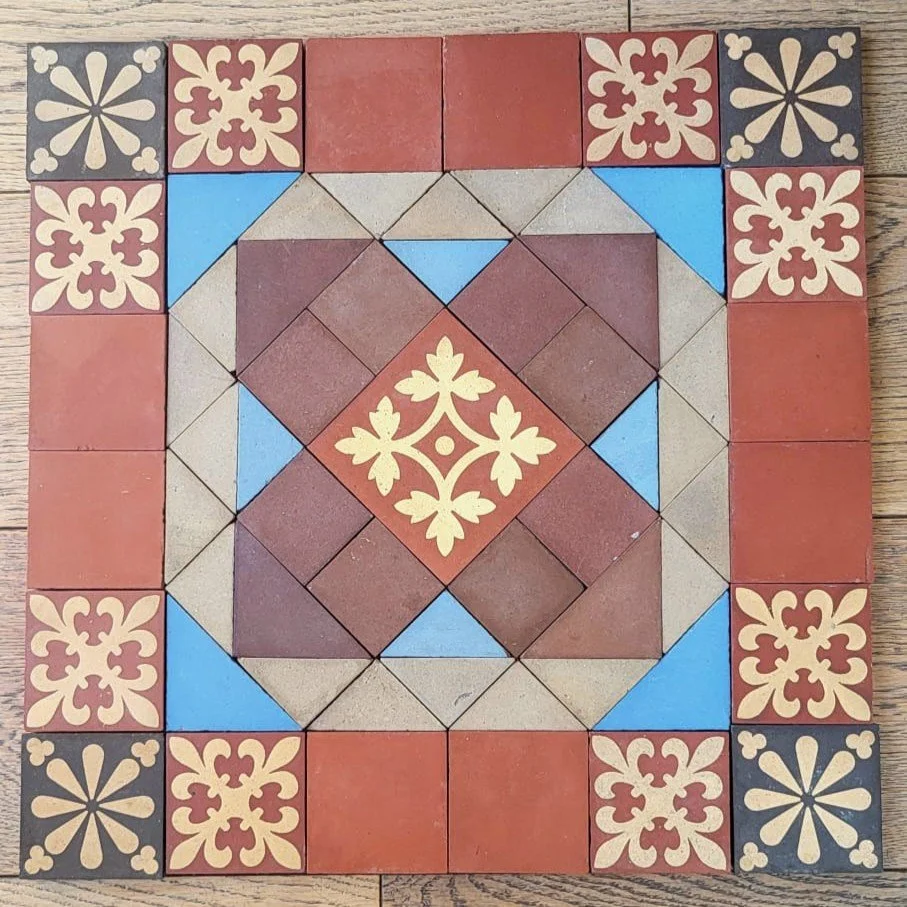
Decorative tile pattern with a central floral design, surrounded by color blocks and geometric patterns in red, blue, beige, and black.